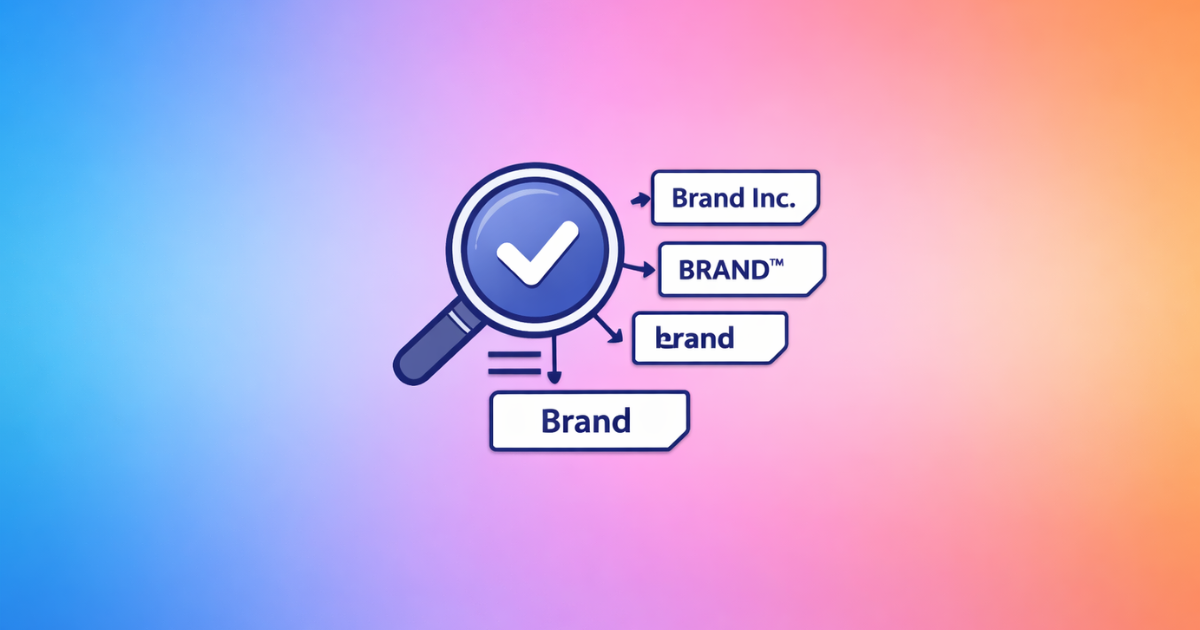
If you’ve ever worked with product data, marketing reports, SEO tools, or analytics dashboards, you’ve probably seen this problem before:
“Apple Inc.”, “Apple”, “APPLE”, “Apple®”, and “apple inc”
All referring to the same brand… but treated as completely different entries.
That’s where brand name normalization rules come in.
In this guide, we’ll break down what brand name normalization rules are, why they matter, and how to apply them in a simple, practical way. No fluff. No buzzwords. Just clear explanations and real-world examples you can actually use.
What Are Brand Name Normalization Rules?
Brand name normalization rules are guidelines used to standardize how brand names are written, stored, and displayed across systems.
In plain terms, they help you decide:
- Which version of a brand name is the “correct” one
- How variations should be cleaned up or merged
- How data should look everywhere, every time
Instead of letting brand names appear in dozens of formats, normalization rules bring everything into one consistent form.
Think of it like tidying up a messy closet. The clothes are fine—but they’re scattered everywhere. Normalization puts them neatly on hangers so you can actually find what you need.
Why Brand Name Normalization Rules Matter
At first glance, this might feel like a small detail. But in practice, it affects almost everything.
1. Cleaner Data and Better Reports
When brand names aren’t normalized:
- Sales numbers get split across multiple entries
- Reports become unreliable
- Trends are harder to spot
With clear brand name normalization rules, all data rolls up correctly under one brand.
2. Stronger SEO and Content Consistency
Search engines value clarity and consistency. When your site uses the same brand name in:
- Product pages
- Blog posts
- Metadata
- Internal links
…it sends a clearer signal to search engines and users.
3. Better Customer Experience
Customers notice inconsistency—even if they can’t explain it.
Seeing:
- “Nike™” on one page
- “NIKE” on another
- “Nike Inc.” somewhere else
can make a brand feel disorganized. Normalization keeps your presentation polished and professional.
Common Brand Name Problems Normalization Solves
Before we talk rules, let’s look at common issues normalization fixes.
Inconsistent Capitalization
- samsung
- Samsung
- SAMSUNG
Extra Words or Legal Terms
- Microsoft
- Microsoft Corporation
- Microsoft Corp.
Special Characters and Symbols
- Coca-Cola
- Coca Cola
- Coca-Cola®
- Coca-Cola™
Spelling Variations
- P&G
- Procter and Gamble
- Procter & Gamble
Without brand name normalization rules, these all get treated as separate brands.
Core Brand Name Normalization Rules to Follow
Let’s break this down into simple, usable rules.
1. Choose One Official Brand Name
Every brand should have one primary version.
Ask yourself:
- What does the brand use on its official website?
- How do they refer to themselves publicly?
- Which version is most recognizable?
Example:
- Use “Apple” instead of “Apple Inc.” unless legal naming is required.
This becomes your anchor for all brand name normalization rules.
2. Standardize Capitalization
Pick one capitalization style and stick with it.
Most teams choose:
- Title Case (Nike, Adidas, Samsung)
Avoid:
- ALL CAPS unless the brand officially uses it
- random capitalization patterns
Consistency beats creativity here.
3. Remove Legal Suffixes (When Appropriate)
Words like:
- Inc.
- Ltd.
- LLC
- Corp.
are usually unnecessary in marketing, SEO, and product listings.
Brand name normalization rules often remove these unless:
- You’re dealing with legal documents
- You must distinguish between two similar entities
4. Handle Symbols Carefully
Trademark symbols (™, ®) cause more problems than they solve.
Best practice:
- Remove them from stored brand names
- Keep them only in legal or brand guideline documents
Example:
- Use “Disney”, not “Disney®”
5. Normalize Special Characters
Hyphens, ampersands, and punctuation should follow one rule.
Examples:
- “H&M” stays H&M
- “AT&T” stays AT&T
- “Coca-Cola” stays Coca-Cola
Don’t alternate between:
- “and” vs “&”
- hyphen vs space
Your brand name normalization rules should clearly define this.
6. Account for Common Aliases
Some brands are widely known by multiple names.
Examples:
- Facebook → Meta
- Google → Alphabet (corporate)
- KFC → Kentucky Fried Chicken
Create mapping rules that say:
- “If X appears, convert it to Y”
This is where normalization becomes powerful instead of rigid.
How Brand Name Normalization Rules Work in Real Life
Let’s make this practical.
Imagine you run an ecommerce site with 10,000 products.
You see:
- “Sony”
- “Sony Corp”
- “SONY”
- “Sony®”
Your rule might be:
Normalize all Sony-related entries to “Sony”
Now your sales, inventory, and SEO data finally line up.
That’s the real value of brand name normalization rules.
Brand Name Normalization for SEO
SEO is one of the biggest reasons teams implement normalization.
Why Search Engines Care
Search engines look for:
- Clear entity signals
- Consistent naming
- Structured information
When brand names vary too much:
- Authority gets diluted
- Internal linking weakens
- Brand signals become noisy
Using consistent brand name normalization rules helps search engines understand exactly who and what your content is about.
Where to Apply Normalized Brand Names
Make sure normalized names appear in:
- Page titles
- Meta descriptions
- Headers (H1, H2)
- Product schema
- Internal links
- Alt text (when relevant)
Consistency matters more than frequency.
Normalization Rules vs. Brand Guidelines
These sound similar, but they’re not the same.
Brand Guidelines
- Focus on visual identity
- Logos, colors, tone, messaging
Brand Name Normalization Rules
- Focus on data consistency
- Databases, SEO, analytics, catalogs
Think of normalization rules as the technical backbone that supports brand guidelines.
Common Mistakes to Avoid
Even good teams slip up here.
Over-Normalizing Everything
Some brands intentionally use different names in different contexts.
Example:
- “Amazon Web Services” vs “AWS”
Don’t force everything into one label without context.
Ignoring Regional Differences
A brand might be known differently in different countries.
Example:
- “Burger King” vs “Hungry Lion” (historical cases)
Your brand name normalization rules should allow for regional logic when needed.
Not Documenting the Rules
If rules live only in someone’s head, they’ll break.
Always document:
- The official brand name
- Known variants
- When exceptions apply
How to Create Your Own Brand Name Normalization Rules
Here’s a simple step-by-step approach.
Step 1: Audit Existing Data
List all brand name variations currently in use.
You’ll probably be surprised how many exist.
Step 2: Define the Canonical Name
Choose one version per brand.
This becomes your “source of truth.”
Step 3: Create Mapping Rules
Decide how variations map to the canonical name.
Example:
- “NIKE INC” → Nike
- “Nike®” → Nike
Step 4: Apply Rules Consistently
Use the same rules across:
- CMS
- Product feeds
- Analytics tools
- CRM systems
Step 5: Review and Update Regularly
Brands evolve. Your rules should too.
Set a regular review cycle.
Tools That Help With Brand Name Normalization
You don’t have to do this manually forever.
Helpful tools include:
- Data cleaning tools
- Spreadsheet formulas
- Tag management systems
- SEO platforms with entity tracking
- Custom scripts or rules engines
Tools help—but the logic still comes from your brand name normalization rules.
A Simple Analogy That Explains Everything
Think of brand names like phone contacts.
If you save:
- “Mom”
- “Mom ❤️”
- “Mom Mobile”
- “Mother”
You’ll struggle to find the right one quickly.
Normalization is saving all of them as “Mom”, with one clean entry.
Simple. Useful. Effective.
Final Thoughts
Brand name normalization rules aren’t flashy. They don’t trend on social media. But they quietly improve everything they touch.
They make data cleaner.
They strengthen SEO.
They improve reporting accuracy.
They create a better user experience.
Most importantly, they help teams make decisions based on reality—not messy, fragmented data.
If you take one thing away from this guide, let it be this:
Consistency builds clarity—and clarity builds trust.
Whether you’re managing a website, a product catalog, or a data pipeline, clear brand name normalization rules are worth the effort.
And once they’re in place, you’ll wonder how you ever worked without them.